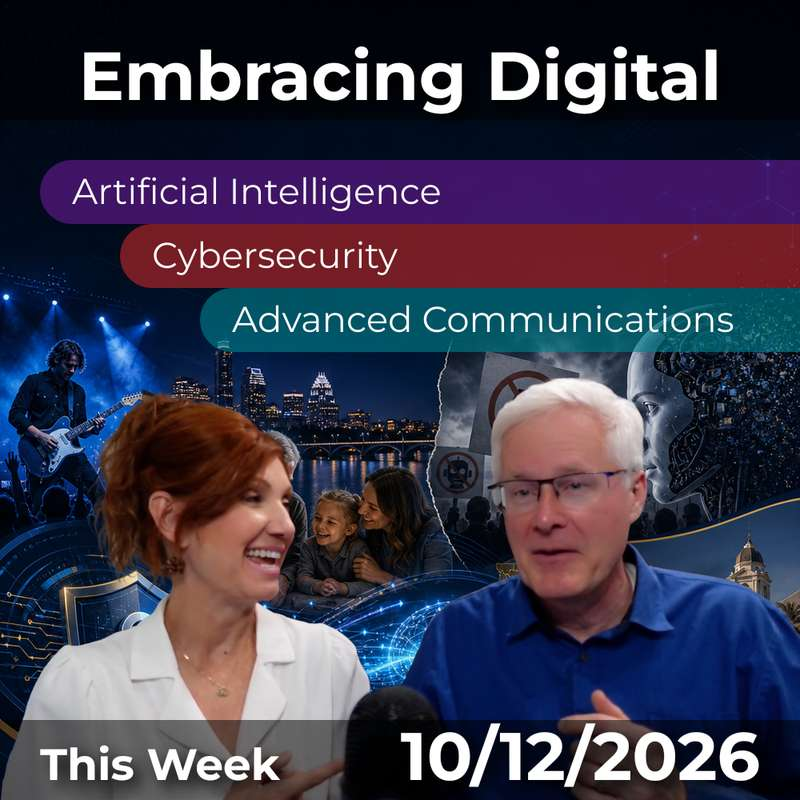
#188 AI Trust, Cybersecurity, and the Future of Connectivity
AI developers are facing sharper scrutiny over data handling and internal controls. One major lab said it dismissed researchers over sensitive information concerns, underscoring how quickly trust issues can reach the top of the industry. At the same time, more organizations are asking how to use AI without exposing confidential work. That matters because secure governance will shape whether enterprises can scale AI responsibly. AI investment is still helping support global economic growth, with Asia positioned to benefit most. The IMF says the technology is offsetting some weaker business conditions, even as many workers and managers remain cautious about automation. That tension is showing up across industries as leaders weigh productivity gains against job disruption. It matters because AI spending is becoming a real economic lever, not just a tech story. Courts and public agencies are looking for practical AI tools that protect sensitive records. A growing focus is on private generative AI models that can help organize, summarize, and process large volumes of documents without sending data into public systems. That approach fits the broader move from AI hype to workflow value. It matters because secure automation could improve speed, accuracy, and service delivery. Cyber threats are hitting more sectors at once. A supermarket chain reported a cyberattack. A health data breach has also drawn attention. At the same time, security teams are tracking new threat activity that targets organizations through familiar systems and human error. For leaders, the lesson is clear: resilience now depends on faster detection, better access controls, and secure automation that can reduce manual work without adding risk. Law enforcement is taking a harder line on ransomware support networks. A Canadian negotiator was arrested amid a wider FBI crackdown, showing that investigators are moving beyond the hackers themselves. That shift raises the stakes for companies handling incidents, payments, and recovery plans. It also underscores the need for disciplined response playbooks, legal oversight, and strong cyber hygiene before a crisis forces difficult decisions. U.S. officials say China-linked cyber activity remains a major concern for critical infrastructure and government networks. These campaigns often blend stealth, persistence, and access to trusted tools. That makes them harder to spot than simple malware attacks. For business and technology leaders, the message is to invest in layered defenses, identity security, and secure AI use cases that help teams process sensitive work faster without exposing more attack surface. The FCC is moving toward a new spectrum auction aimed at boosting direct-to-device services. That could help phones and connected devices link more directly to networks, especially in areas with limited coverage. It also reflects a broader push to modernize wireless infrastructure as demand grows. The decision matters because advanced connectivity is becoming a foundation for digital transformation across industries. SpaceX says it plans to become a major mobile carrier, signaling another step toward blending satellite and terrestrial communications. The move could widen service options for consumers and businesses that need coverage beyond traditional networks. It also highlights how fast the telecom market is changing. This matters because resilient, flexible connectivity is becoming essential for operations, automation, and remote work. A new developer summit is putting open-source RAN and ecosystem collaboration in focus. The goal is to help builders and operators create more adaptable 5G systems with broader vendor choice. Another demonstration showed multi-vendor 5G and satellite connectivity on a virtualized ground platform, underscoring the push for interoperability. This matters because open, converged networks can lower costs and speed deployment.