
AI governance, cyber risks, and outage resilience
Top Stories
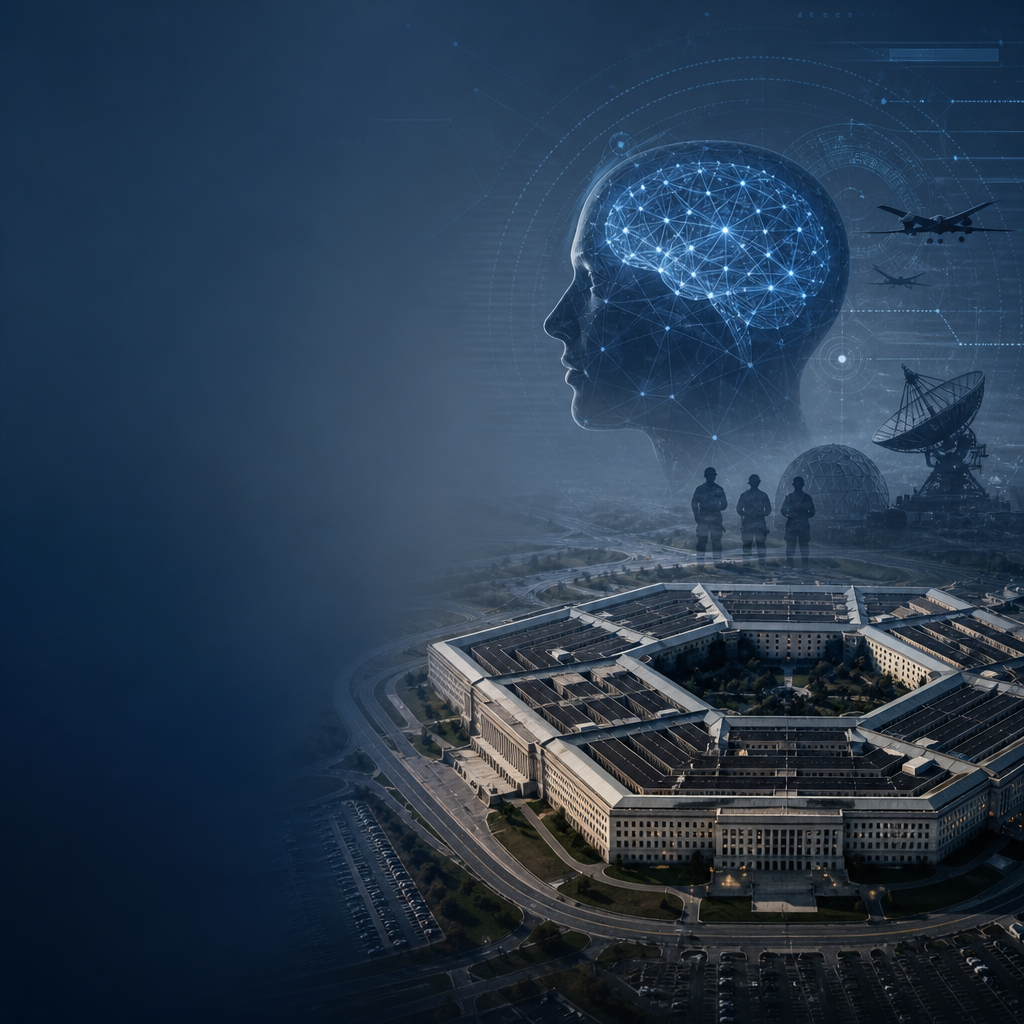
Pentagon elevates AI office with super-intelligence mandate
The Pentagon is giving its main AI unit a new name and a bigger remit. The move signals a push to organize advanced AI work under a sharper strategic umbrella. That kind of shift matters because technology leadership is becoming as important as technology itself. In fast-moving systems, clear architecture, governance, and risk separation can determine whether AI scales safely or becomes another fragile integration point.
Attackers exploit software flaws before patches land
Security teams are racing to contain fresh attacks that weaponize known software weaknesses. One campaign targets UnrealIRCd, showing how quickly attackers move once a flaw becomes public. Another FBI alert warns of a separate malicious tool used in active operations. The pattern is familiar: small gaps become enterprise-wide risks when systems stay tightly coupled. It matters because faster patching and stronger architecture reduce disruption and protect digital operations.
Outages expose weak links in connected systems
A string of outages showed how tightly coupled digital services can fail fast. Cloud disruptions hit email, enterprise software, and even aviation operations, creating wide ripple effects. The common thread is not just software bugs. It is fragile architecture and limited resilience planning. Companies that map dependencies, separate critical functions, and test recovery paths will be better prepared. That matters because digital transformation depends on systems that stay usable when stress hits.
Pillar Briefs
Artificial Intelligence
Pentagon elevates AI office with super-intelligence mandate
The Pentagon is giving its main AI unit a new name and a bigger remit. The move signals a push to organize advanced AI work under a sharper strategic umbrella. That kind of shift matters because technology leadership is becoming as important as technology itself. In fast-moving systems, clear architecture, governance, and risk separation can determine whether AI scales safely or becomes another fragile integration point.
Sources:
Public trust in AI remains mixed across Australia
Australian views on artificial intelligence are still uneven. Some people see useful gains in productivity and services. Others worry about control, jobs, and reliability. That split matters for companies rolling out AI in customer-facing and operational systems. Adoption depends on trust, clear communication, and strong oversight. For digital transformation, the lesson is simple: resilient architecture and transparent governance are as important as the model itself.

Sources:
AI is changing writing and legal work fast
Artificial intelligence is reshaping two knowledge-heavy fields: writing and law. The technology is speeding drafting, research, and routine review. But it is also forcing professionals to rethink judgment, originality, and accountability. That matters because the best results come from well-designed human and machine workflows. Organizations that align systems, roles, and controls will adapt faster and avoid brittle processes built on hype alone.

Sources:
- https://dailynous.com/2026/11/11/what-may-artificial-intelligence-do-for-writers/
- https://techspective.net/2026/11/14/how-artificial-intelligence-is-reshaping-the-legal-profession/
Cybersecurity
Attackers exploit software flaws before patches land
Security teams are racing to contain fresh attacks that weaponize known software weaknesses. One campaign targets UnrealIRCd, showing how quickly attackers move once a flaw becomes public. Another FBI alert warns of a separate malicious tool used in active operations. The pattern is familiar: small gaps become enterprise-wide risks when systems stay tightly coupled. It matters because faster patching and stronger architecture reduce disruption and protect digital operations.

Sources:
- https://thehackernews.com/2026/11/attackers-exploit-unrealircd-flaw-that.html?m=1
- https://therecord.media/artex-ai-tool-fbi-flash-alert
Outages revive fears about fragile digital infrastructure
A week of grounded flights, cloud disruption, and broader service trouble has sharpened concern about how dependent business is on connected platforms. Even when the cause is not a cyberattack, the impact can look the same. Leaders are being pushed to review resilience, dependencies, and recovery plans. It matters because digital transformation only works when core systems are designed to fail safely and recover quickly.

Sources:
Ransomware and sabotage keep pressure on global defenses
Universities and governments remain in the crosshairs as ransomware and state-linked sabotage continue to spread. Vanderbilt University disclosed a ransomware incident tied to BYOD exposure, while France is reporting another wave of Iranian cyber sabotage. The lesson is clear: identity, device control, and segmentation still matter. It matters because resilient architecture can limit blast radius, preserve trust, and keep essential services running.

Sources:
- https://cyberscoop.com/vanderbilt-university-ransomware-attack-byod/
- https://www.fdd.org/analysis/france-is-latest-victim-of-iranian-cyber-sabotage-first-unleashed-on-israel/
Ubiquitous Computing
Outages expose weak links in connected systems
A string of outages showed how tightly coupled digital services can fail fast. Cloud disruptions hit email, enterprise software, and even aviation operations, creating wide ripple effects. The common thread is not just software bugs. It is fragile architecture and limited resilience planning. Companies that map dependencies, separate critical functions, and test recovery paths will be better prepared. That matters because digital transformation depends on systems that stay usable when stress hits.

Sources:
- https://qz.com/why-cloud-services-go-down-causes
- https://www.wired.com/story/major-microsoft-outlook-outage-hits-365-customers-north-america/
- https://www.aljazeera.com/amp/news/2026/11/15/what-forced-the-us-to-ground-all-planes-a-router-switch-we-now-know
Enterprise software downtime raises resilience concerns
A prolonged Workday outage disrupted payroll and timekeeping for some customers, underscoring how much business now runs on a few core platforms. Even short outages can create compliance, employee, and cash-flow problems. The lesson is clear. Vendor reliability matters, but internal architecture matters too. Organizations need backup processes, tested contingencies, and clearer ownership of risk. That matters because operational continuity is becoming a core requirement of modern digital business.

Sources:
- https://fourweekmba.com/ai-workday-outage-ran-18-hours-sla-allows-42-minutes-a-month/
- https://uctoday.com/workday-outage-backup-test-payroll-timekeeping
Cloud resilience now demands better architectural discipline
Recent failures are pushing executives to rethink how cloud and SaaS environments are designed. The issue is not simply uptime. It is how systems are connected, monitored, and restored when something breaks. Strong enterprise architecture can reduce blast radius and make recovery faster. That means more attention to standards, redundancy, and decoupling. It matters because resilient architecture is now a business differentiator, not just an IT concern.

Sources:
- https://qz.com/why-cloud-services-go-down-causes
- https://www.wired.com/story/major-microsoft-outlook-outage-hits-365-customers-north-america/
- https://fourweekmba.com/ai-workday-outage-ran-18-hours-sla-allows-42-minutes-a-month/
Embracing Digital Transformation
Outages sharpen focus on resilient digital architecture and adaptive leadership
The latest Embracing Digital Transformation episodes argued that digital change depends as much on organizational design as on technology. One episode framed innovation as a systems problem, saying ideas often stall because organizations lack structures that let them move across silos and into new contexts. Another focused on resilience, describing it as learning forward after disruption rather than relying on toxic positivity, and stressing that leaders must remove blockers and create conditions that help teams adapt and keep moving.
Those themes align with this week’s reporting on outages and service fragility. News about grounded flights, cloud disruption, and enterprise software downtime underscored how tightly coupled systems can turn technical failures into broad operational problems. The coverage pointed to the same remedy the podcast episodes emphasized: stronger enterprise architecture, clearer governance, and deliberate decoupling so organizations can reduce blast radius, recover faster, and turn disruption into learning rather than paralysis.
Sources:
- https://share.transistor.fm/s/f7655dcf
- https://share.transistor.fm/s/378e645c
- https://www.france24.com/en/technology/20261115-is-this-a-cyberattack-grounded-flights-a-microsoft-outage-and-ai-chaos-fuel-cybersecurity-fears
- https://qz.com/why-cloud-services-go-down-causes
- https://uctoday.com/workday-outage-backup-test-payroll-timekeeping