
The Strategic Domain: Navigating Layers of Digital Transformation
Digital transformation is a journey many organizations pursue, yet it often meets with frustration. Too frequently, transformation efforts fail not due to a lack of technology, but because strategic intent does not coalesce into executable decisions. The heart of this challenge lies within the Strategic Domain, which serves as mission control in navigating this complex landscape.
The Heart of the Matter
Imagine an organization aiming to innovate and adapt; stakeholders are excited, investments are made, yet progress stalls. One common cause of this stagnation stems from a disconnect between strategic aspirations and the means to realize them. Executives may articulate grand visions, but without a coherent architecture that aligns every layer of strategy with its execution, initiatives often become isolated silos, drifting from intended outcomes.
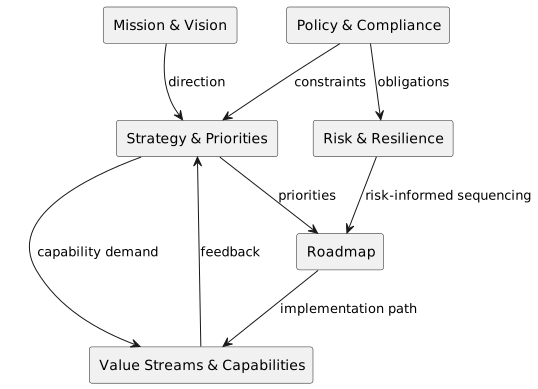
This disconnect breeds the necessity for a clear understanding of the Strategic Domain—an architectural framework that underpins successful digital transformations. When structured thoughtfully, this domain does not act merely as a collection of documents but acts as a living blueprint guiding decision-making across the organization. Here, we will explore the six first-level layers of the Strategic Domain—Mission & Vision, Policy & Compliance, Risk & Resilience, Strategy & Priorities, Roadmap, and Value Streams & Capabilities—and discuss their interconnectedness as essential components to ensure that strategic intent translates into actionable execution.
The First-Level Layers Explained
At its core, the Strategic Domain is organized into six layers, each serving a distinct role in facilitating a cohesive approach to transformation:
-
Mission and Vision: This foundational layer articulates the overall purpose and direction of the organization. A clear mission and vision help unify teams around shared goals, which is critical to fostering collaboration across various departments.
-
Policy and Compliance: Operating within a legal framework is non-negotiable for organizations in any sector. This layer encompasses the necessary regulations, policies, and compliance measures essential for maintaining operational integrity. It’s vital to integrate these considerations early in the strategic process rather than treating them as afterthoughts.
-
Risk and Resilience: Evaluating strategic risks, understanding organizational resilience, and prioritizing potential challenges are critical at this layer. Organizations must be equipped to identify vulnerabilities and establish ongoing risk assessment mechanisms to navigate uncertainty effectively.
-
Roadmap: A comprehensive roadmap connects the present state of the organization to its envisioned future. It outlines transformation initiatives and provides a pathway for achieving strategic goals, marking crucial milestones along the journey.
-
Strategy and Priorities: Here, organizations define their strategic objectives, focusing on what they aim to achieve while aligning with the overall mission and vision. This layer incorporates both historical outcomes and future projections to create a coherent strategy.
-
Value Streams and Capabilities: This layer emphasizes the need to create real value through the organization’s operations. By mapping capabilities to value streams, organizations can identify how their actions contribute to delivering value to customers and stakeholders.
It’s critical to understand that these layers should not be envisioned as independent silos; they must work in harmony as an integrated system. Treating each layer separately can lead to a fragmented approach, where local optimizations may occur at the expense of broader strategic goals.
The Importance of Interconnections
The strength of the Strategic Domain lies in its interconnectedness. When the layers interact effectively, they create a cohesive structure that enables organizations to navigate complex transformation landscapes:
-
Mission and Vision should guide the creation of Strategy and Priorities, ensuring all objectives resonate with the organization’s core purpose.
-
Policy and Compliance need to constrain strategic initiatives proactively rather than reactively, establishing guardrails that prevent misalignment.
-
Risk and Resilience should inform the Roadmap, guiding investment timing and sequencing based on assessed uncertainties.
-
Strategy and Priorities directly impact the enhancement of Value Streams and Capabilities, ensuring that pursuits align with value creation.
-
Lastly, outcomes tied to Value Streams must inform periodic updates to strategic objectives, creating a feedback loop that refines the enterprise’s approach.
Failing to establish these connections can result in teams performing activities disconnected from outcomes, jeopardizing the transformation effort.
Learning from Common Pitfalls
Experience reveals several common pitfalls that organizations encounter during their digital transformations:
-
Vision without Decision Constraints: A vague or overly broad mission can lead to misunderstandings around strategic priorities and effectiveness.
-
Compliance Treated as an Afterthought: Organizations that add compliance mechanisms late in the process often scramble to align their initiatives with regulatory requirements, hindering progress.
-
Risk Reviewed After Commitments Are Made: Delaying risk assessments can expose organizations to vulnerabilities that affect their long-term success.
-
Disconnected Roadmaps and Capabilities: If roadmaps do not correlate with organizational capabilities, initiatives may lead to wasted resources without improving meaningful outcomes.
These pitfalls create cascading effects within the organization: strategy misinterpretation, increased rework, higher risk exposure, and lackluster portfolio effectiveness.
Practical Takeaways for Transformation Leaders
To operationalize insights from the Strategic Domain, consider the following actions:
-
Document the state of all six layers, even if incomplete.
-
Identify existing gaps in mission clarity and compliance frameworks.
-
Verify that roadmap items align with strategic priorities and capability development.
-
Ensure value streams tie directly into measurable outcomes to evaluate progress.
-
Conduct regular cross-layer reviews with defined decision ownership to maintain strategic cohesion.
By investing time in this preparatory work, organizations can govern their strategies more effectively, adapt to changes rapidly, and execute transformation with greater resilience.
Takeaways
Embracing the Strategic Domain equips organizations with the architectural foresight needed to bridge the gap between intention and execution. By beginning with a holistic view of the mission, policy constraints, risks, roadmap developments, strategic objectives, and value creation, leaders can guide their teams more effectively.
For more in-depth exploration of these concepts, consider diving into the associated blog post and full lecture that detail how the Strategic Domain supports digital transformation.
Learn More
-
Full lecture episode: https://embracingdigital.org/en/lectures/dta-9/index.html
-
Series blog summary: https://embracingdigital.org/en/digital-transformation/whitepapers/WP-03/