
Organizational Domain layers and what they control
Introduction to the Organizational Domain Layers
In the rapidly evolving landscape of digital transformation, organizations face a pressing challenge: understanding the structure and dynamics that govern their effectiveness. It’s easy to leap toward technological solutions, yet the heart of transformation lies in the intricate web of human and structural interactions that define an organization. This article explores the Organizational Domain, which comprises seven interdependent layers — Stakeholders, Personas, Communication Channels, Roles & Responsibilities, Skills & Competencies, Structure, and Culture & Values. Each layer plays a decisive role in influencing how an organization functions, how decisions are made, and how effective transformation can be achieved.
Recognizing the interplay among these layers is crucial for leaders looking to drive meaningful change. Understanding these facets reveals that digital transformation is less about chasing the latest technology and more about designing coherent systems that embrace human perspectives and improve accountability.

Key Insights from the Lecture
Exploring the First Three Layers: Stakeholders, Personas, and Communication Channels
The journey begins with the Stakeholders Layer, which identifies all people and groups that exert influence on the organization’s direction and success. This encompasses not just internal actors, such as employees and executives, but also external parties like customers, partners, and regulatory bodies. A clear representation of stakeholder dynamics is essential, as their varying interests can significantly shape a company’s strategy and governance.
Next is the Personas Layer, which translates these stakeholders into relatable human archetypes. This translation helps ground discussions in reality, ensuring that the organization remains focused on its human context. For instance, understanding employee personas can clarify the varying needs and motivations within the workplace, which is invaluable for designing effective strategies that resonate with those individuals.
The Communication Channels Layer establishes the frameworks through which stakeholders interact. Effective communication paths facilitate information flow and collaboration, significantly impacting decision-making processes. A well-designed communication strategy can pinpoint where collaboration is successful and where bottlenecks may exist, thus improving overall organizational effectiveness.
Delving Deeper: Roles & Responsibilities, and Skills & Competencies
As we shift to operational dynamics, the Roles & Responsibilities Layer emerges as a critical focus. This layer maps out the specific roles individuals play within the organization, clarifying accountabilities that enhance operational efficiency. When roles are muddled or poorly defined, accountability can diffuse, leading to confusion about who is responsible for achieving objectives, which hampers performance.
Interconnected with this is the Skills & Competencies Layer, which addresses the capabilities required to fulfill those roles effectively. A clear alignment between roles and the necessary skills is vital; gaps here can result in mismatches that lead to operational inefficiency. For example, a ride-sharing service might need drivers with both good navigation skills and customer service abilities. Failure to ensure that roles align with these skills can overwhelm some employees while underutilizing others, which ultimately leads to frustration and dissatisfaction within the workplace.
The Final Two Layers: Structure and Culture & Values
The discussion rounds out with the Structure Layer, which defines how the organization’s hierarchy and operational dynamics are framed. Understanding not just the documented structures, but also the informal ones that actually dictate how decisions are made, is essential. Note that decisions often reflect more about perceived authority than documented roles.
Then we consider the Culture & Values Layer, which encompasses the shared beliefs that guide engagement and collaboration within the organization. A disconnect between the espoused values and lived experiences can lead to significant morale issues and dysfunction. The structure directly influences culture; for instance, organizations that adopt a flat structure may promote collaboration and openness more readily than those with strict hierarchies, affecting employee satisfaction and retention.
Interdependencies of Layers
The interplay between these layers forms a complex web of interdependencies.
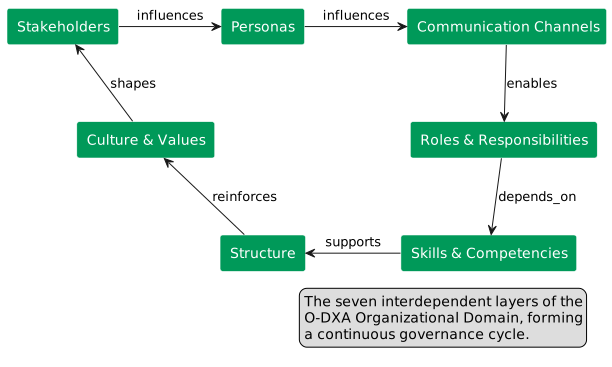
A change in one layer will invariably ripple through the others, highlighting the need for coherence across all seven layers for successful transformation. For example, an organization that introduces a new communication platform must also align it with existing roles, competencies, and structures for it to be effective. Neglecting these connections can undermine transformation initiatives, rendering them ineffective, as one layer’s adaptation cannot adequately support change across others.
Understanding these dependencies is crucial for leaders aiming to enhance organizational efficiency and effectiveness over time. It becomes apparent that fostering a culture of adaptability requires a keen awareness of how each layer constrains or enables change.
Why This Matters
As organizations embark on their digital transformation journeys, an appreciation for the nuanced structure of the Organizational Domain is imperative. Each layer serves a distinct purpose and holds unique implications for coordination and collaborative synergy. Leaders must design strategies that value the complexity of these interactions to foster agility and responsive decision-making.
Recognizing and mapping out each layer ensures that transformation efforts are well-aligned with organizational realities. The ability to navigate and harmonize these layers not only enhances the potential for transformative success but also helps secure an organization’s resilience and adaptability in the face of disruption.
Listen and Go Deeper
To explore the insights shared in this lecture fully, listen to the full episode here: https://embracingdigital.org/en/lectures/DTA-13. Utilize the principles of the Organizational Domain to inform your strategic decision-making and architectural frameworks as you guide your organization toward effective transformation.
Further exploration: https://embracingdigital.org/en/lectures